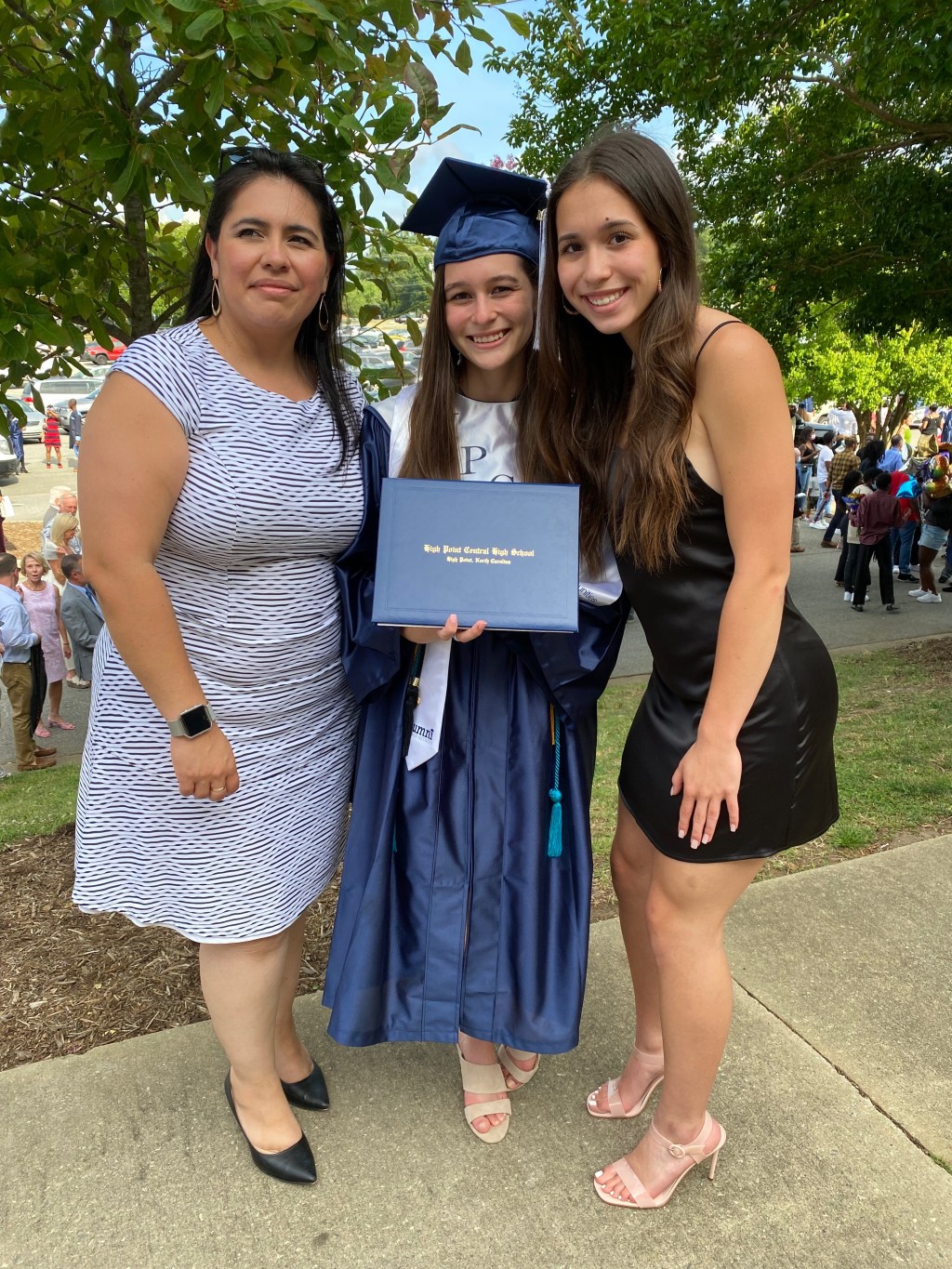
By Casandra Krajisnik
I was about nine when I understood what it meant to be non-white.
I was roughly 12 when I understood being white-passing was better than being visibly Hispanic/ Latina.
I was in high school when my mother said, “I don’t speak Spanish in public because I’m afraid.”
The five minutes in the kitchen
We’d been in the kitchen that day. My mother was doing her best to defend undocumented immigrants on a racist and uneducated Facebook post. All I remember from those five minutes was that I proofread my mother’s response (a rather common occurrence), my sister was against my mother responding and my mother was admitting her fears.
In five minutes, everything made sense.
The looks, the quiet remarks, the sudden distance. Those five minutes were the part of the puzzle I’d been missing.
Our reality is not yours
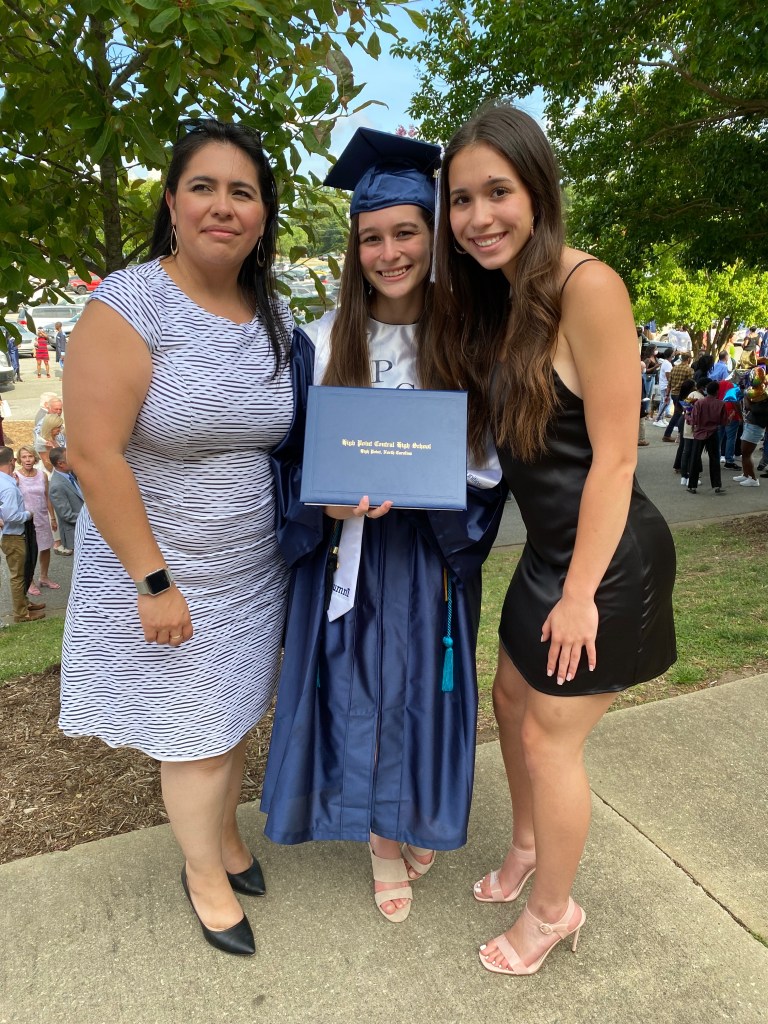
My mother’s fear to speak her native tongue in public sparked a passion in me that had been growing for six years, maybe longer. Her drive to preserve Spanish in my sister and I didn’t seem so annoying anymore. Being Mexican in an American city creates a string of fears. That fear is for your children, for their safety and lastly, your own safety.
It’s a risk to reveal how “non-American” you are.
This was her reality.
You’re safe if you can pass as white and American-born. I’m white-passing, but I identify as a first-generation Mexican-American. I’m safe because of my skin color and mostly muted accent. I live in a cultural limbo I’ve learned to live with in both countries I’ve been to. I’ve never been to my father’s country, but I’ve been to my mother’s home country, Mexico, where I’ve been visiting twice a year since I was two. I was still in limbo up until the beginning of the COVID-19 pandemic.
I wasn’t the same as them. I’m not the same as you.
“Non-white” is synonymous with “different” everywhere. “First-generation” is recently synonymous with “unwanted.”
I learned I was “different” and “unwanted” too quickly.
It wasn’t because of anything anyone said. It was what wasn’t said. The only thing that has ever been clear is that look I get when I reveal my heritage. The looks and remarks and distance my mother had shielded me from for so long were the clearest thing in my memory.
It was all clearer than that day in the kitchen.
Different, or just another stereotype
But why is different bad?
Roughly 18.7% of the U.S. is Latino/Hispanic according to the 2020 census. That’s a 23% increase since 2010. There is more Latino/Hispanic “brown-ness” in the U.S. and yet, I still am the odd factor. A non-white or first-generation existence is a limbo existence.
Here, on the High Point University campus, a campus that has eaten away at my hometown, the racial demographic is “below average” in multi-ethnic diversity, according to College Factual. Hispanic falls short of 6% of the student population.
In Spanish, there’s a phrase: “Ni de aquí, ni de allá.” It means “Neither from here, or from there.” You have no place in society. You live in a limbo when you’re mixed-race or first generation.
Speaking from personal experience, one learns you don’t belong in your country of birth or your parents’ countries of birth. Being non-white, but white-passing, creates a barrier to the integration of white society because your culture is non-white, but your society is not. You just exist in the oftentimes awkward middle.
It’s never easy being anything but white in a society where white is the ideal. Color is stereotyped and romanticized. Life is harder due to gatekeeping by self-glorified whites attempting to play holy non-racists. Thankfully, there are whites who are willing to understand and enjoy without self-imposing an unneeded crusade.
It’s even worse when you aren’t “enough.” You don’t belong anywhere with a mixed identity like my own. Identity of color is a complicated theme in a white society because you can’t be “too much” or “not noticeably” of color. Being “just enough” is a non-white struggle. It sucks energy from us.

But is it all bad?
I don’t think I would change a thing about my identity. I’m in love with my culture. It’s beautiful and unique and connected with the indigenous lives lost to colonists.
I like being the wild card: the gringa that isn’t actually a gringa.
I also like feeling like I’m a part of a family connected less by borders and more by pride that you “came home.”
Yes, Mexico has her cultural issues, but so does every country. That must be worked on. I wish that anyone else with a non-white culture didn’t have to suffer because of heritage. Every human shares red blood, so we should judge by character, not race or skin color.
So, what does it mean to live non-white in a white society?
It means to be different. It means you get to go on your own journey, one that not even your siblings can go on. Your heritage is not going to match your cousins, your siblings or your own kids, should you choose to have them.
And that’s beautiful.
Non-white can be different.
“Different” can also be “beautiful.”
Casandra Krajisnik is a freshman at High Point University majoring in Journalism with a minor in Civic Engagement/Social Innovation. For contact inquiries, please email ckrajisn@highpoint.edu.
 NewsPoint Network