By David Kleinchuster
“I could never do what you do,” a woman said.
“Do what?” replied David Ridge.
“I could never cut someone’s neck open, hang them upside down by their feet and drain their blood,” the woman said in full sincerity.
Rearing back in shock from the off-handed comment, Ridge regains his wits. “Ma’am, I could never do that either,” he said.
Imaginative questions like this frequently find their way across Ridge’s expertise.
Ridge is not a vampire, but being an embalmer of the dead raises many concerning curiosities.
After pulling into his driveway, Ridge exited his car and made his way to his front door. Opening the door invited an excitement of pounding, socked footsteps from his daughter rushing to greet him. A smile of warmth from his wife followed.
Ridge greeted his family with love and baggy eyes. Working two to three jobs had put a lot of pressure on him. He loved the impact he made in the families’ lives directly by serving their needs. He just did not not like the job itself. Even though the pay for manufacturing toner cartridges and making deliveries created a comfortable cushion of stability, Ridge knew he was meant for more.
Keeping up frequent conversations with his wife about the desire he has to serve people in a different manner, his wife suggested that they pray about it.
During this time, Ridge and his family had lost several relatives. His grandfather, both of his wife’s grandparents and many church family members had died. Every time he entered a funeral home, he felt an urge to ask the mortician what his jobs consisted of, but he was always too nervous to ask. He always left the funeral home with a curiosity that ate away his insides.
He and his wife continued to pray over it.
Coming back into his office after making another delivery, he found a sticky note with a name and number on it. The individual on the other end of the line was the funeral director who had handled Ridge’s grandmother’s funeral service. He was very impressed with Ridge’s singing during the service and offered him the opportunity to sing during the annual Christmas performance his funeral home held.
Accepting the offer ecstatically, he knew this was an open door from God.
“I told my wife, ‘You’re going to think I’m crazy, but if I don’t ask this guy what he does and find out more about this job, I don’t know if I’ll ever stop thinking about it,’” Ridge said.
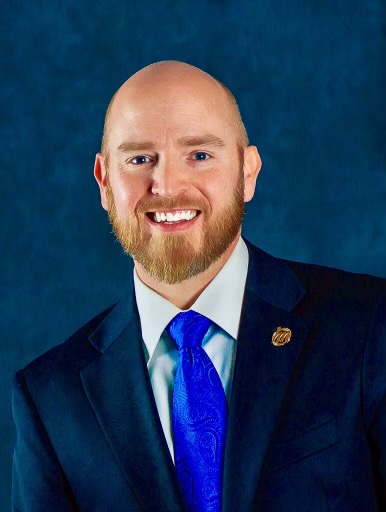
Ridge has been consoling families as an embalmer since 2006 and has been employed with Hayworth-Miller Funeral Homes and Cremation since 2009.
The journey leading Ridge to the path of embalming was unique and he would not change any outcome of the life he breathes today.
Embalming is a unique technique for handling the dead. The process involves raising specific arteries and veins in the body, usually the common right carotid artery and the right jugular vein. Pumping the formaldehyde chemical mixture through the artery allows the fluid to drain the blood out of the body’s circulatory system. In addition to draining the blood, the mixture disinfects the body, adds an elasticity to the skin and preserves the body. This is an immediate process that needs to be done after the report of death so that the body does not start its initial stages of decomposition. This process typically lasts an average of 30-40 minutes.
After the embalming procedure, the embalmer hopefully has a relevant photo of the person before he or she died. The goal of embalming cosmetics is to recreate the perfect reflection of who this person once was.
Ridge excels in the cosmetic arts. His wife and daughter now even ask for him to be their personal hair stylist. Concerning embalmment cosmetics, he has become such a master of the craft that his peers sometimes must tell him to stop adding adjustments to the body. He is a perfectionist because he has one desire – that the viewing family may look upon their loved one looking as charming as the days before their death.
Ridge’s worst feeling and biggest pet peeve comes from entering other funeral homes and seeing the lack of effort put forth by the embalmers.
“Their makeup is caked on their face and it looks terrible,” Ridge said. “You want to make it as minimal and natural to make the person as real as possible.”
A good embalmer must excel in his or her artistic capabilities. Many people do not resemble their true selves when they die and in order to comfort families who experience a loved one’s death, one must consider that the dead have gone through sickness, surgeries and in some cases traumatic injuries.
Hannah Kiger, another head embalmer for Hayworth-Miller, paints the scene for handling traumatic deaths in a sorrowful light.
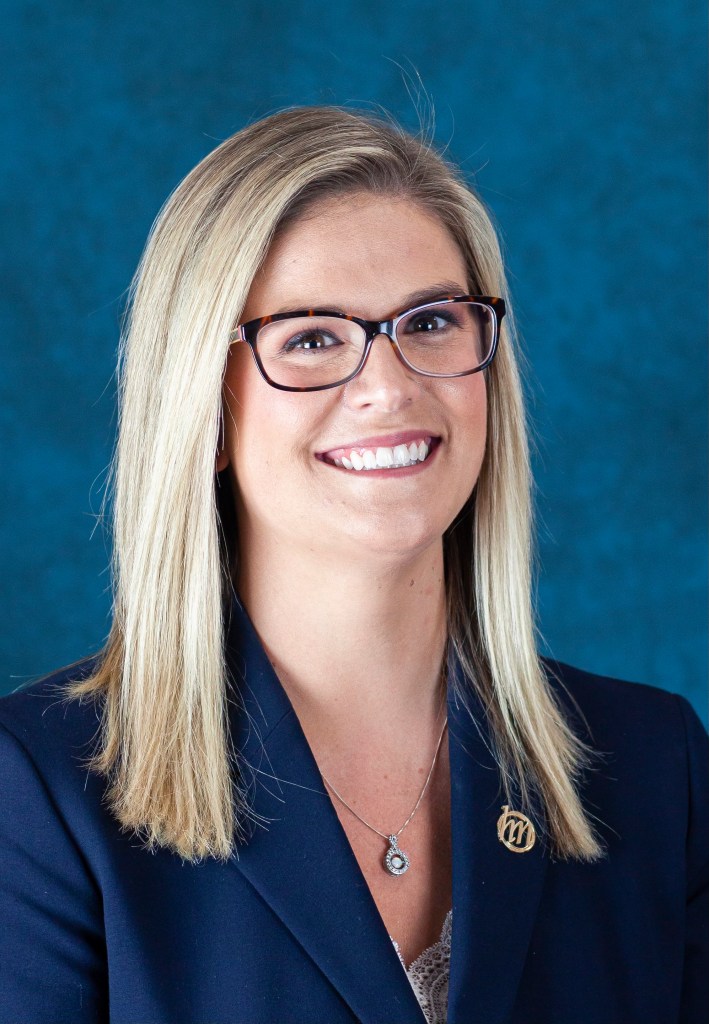
Kiger remembers walking down the pews, choking up tears; this was not a regular funeral.
One of Kiger’s best friends had two younger brothers, 12 and 19 years old, who died in a tragic boating accident. The rippling wave of devastation and heartbreak washed over the viewers of the two boys’ coffins.
Their funeral was handled by Hayworth-Miller; though the weight of these deaths were too heavy for Superman to lift.
“The service was perfect,” Kiger said.
Thousands of people came to visit and pay their respects and the service flowed so smoothly. The memory of these two children was the priority for Hayworth-Miller and their delivery was flawless.
Kiger is accustomed to death.
“My family never sheltered me from funeral homes,” said Kiger. “They wanted me to experience it and not be creeped out by it as an adult.”
Her grandfather, grandmother and great aunt all died in the duration of her high school years. The exposure she was receiving from funeral homes led her to become accustomed to the business.
What drew her interest toward working in a funeral home was not just the effects of a successful funeral service has on a family, but the effects that unsuccessful ones have.
Kiger’s grandfather’s funeral was the catalyst for her career.
“The funeral was not put together well and it was not about him,” Kiger said. “There was no direction and they embalmed him before they ever saw a picture of him. He didn’t look anything like himself.”
Her grandmother was traumatized at the first sight of her late husband. Shaking as Kiger and her mother walked her out of the room, the two decided to re-enter the room and reconfigure the horror that the careless embalmers had left.
Rising from her grandfather’s side, he now looked as handsome as the day before he had died. Her grandmother was so thankful for Kiger’s care toward her husband.
The terror of the carelessness for her grandfather and the admiration of the intricate service for the two boys are what spoke volumes to her. It all came down to the perfect moment when someone like Kiger could serve a family and help them find closure.
Though Kiger’s grandfather did not die tragically, the two boys did. No matter the death, but especially in cases of traumatic death, the embalmers must take action to perform restorative techniques.
“Sometimes we can do a whole lot, sometimes we can’t,” said Ridge. “All we can do is try.”
When the death of a loved one occurs, ultimately, the family or those closest to the person are not thinking about how the body could look. They did not see the aftermath of what happened and they sometimes try to see the result of their loved one.
“You have to walk on eggshells, and sometimes you have to be brutally honest…they’re going to trust our personal opinion about it and sometimes you have to just say that you don’t advise this,” said Kiger.
Kiger and Ridge’s biggest encounters always come from the despair and heartbreak of broken families.
Comforting families consistently remains the priority, yet comforting a mother who has just lost her young daughter in a house fire kindles a new flame for cosmetic excellence.
The weight resting on the embalmer’s shoulders drove them into a deeper desire to break every boundary in cosmetic skills.
“We tried a lot to make her look the best she could,” said Ridge. “She was extremely thankful for the effort we put into her daughter.”
Though both Ridge and Kiger have grown into the art of embalming, cases like these become more taxing because they cannot imagine what the family is going through.
“Whether it’s a car accident or murder, it breaks my heart,” Kiger said. “I’m a very empathetic person, like, I’ll cry with families. It’s probably inappropriate, but I can’t help it sometimes.”
In any instance where a mother and father lose their child tragically, both Ridge and Kiger strive to make the perfect last moment for the family to receive a moment of closure.
“Thank the Lord I’m marrying someone who is a funeral director already,” Kiger said. “I don’t know what the dating pool is like right now. I don’t know anyone who isn’t creeped out by it.”
Many view the field of mortuary study in a dim and judgmental light. Anyone who wants to handle the dead must be peculiar, right?
On the contrary.
Curiosity gets the best of people. Ridge and Kiger did not invite a spirit of eeriness, but an outpouring of compassion and empathy. The families get to see their loved ones witness the intentionality of their work and their efforts impact every heart. Ridge and Kiger bring joy, not sorrow, into their art.
For more information about Hayworth-Miller Funeral Homes and Cremation, please visit their website.
David Kleinschuster is a senior at High Point University majoring in Journalism and double minoring in Political Science and Military Science. For contact inquiries, please email dkleinsc@highpoint.edu.
 NewsPoint Network