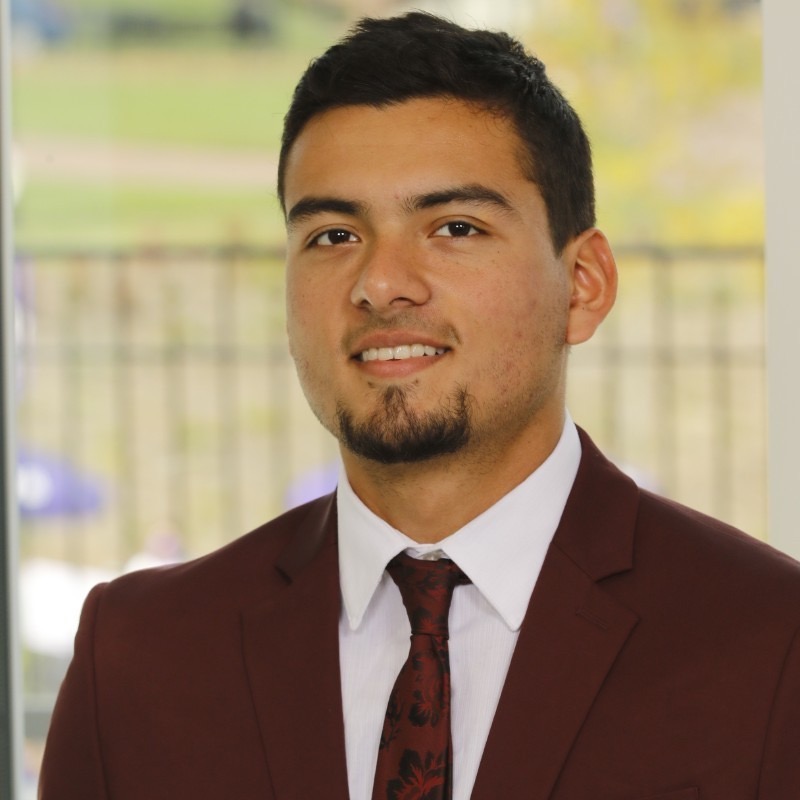
By: Reece Harnett
He takes a deep breath, stands up from his safe, cushy seat, pats the creases out of his gray suit
pants, and makes his way to the empty side of the stage to begin the debate.
In the main ballroom of Atlanta’s lavish Westin Hotel, the distant, other side of the stage is
packed like sardines, the opposing brothers waiting to pounce as soon as they can. He is alone.
The wooden podium holds him up strong as he grabs it to stop his hands from shaking. A sea of
over 300 recently uninterested fraternity brothers suddenly perk up in anticipation, with no clear
expectation of what would happen next.
As soon as he speaks, his worries wash away and his heart wins the battle.
His words settle among the crowd of shocked, impressed but quiet faces. Stepping off the stage
and sitting back down next to the friends he had made during the weekend, he hopes that what he had just done did not ruin these relationships.
The speaker stands up one more time and announces that the controversial proposal has been
denied. Nico Martin won.
“I had national advisors come up to me and shake my hand and tell me that it took guts to do
what I did,” says Nico Martin, High Point Beta chapter president, “So that’s when I knew I did
something that truly mattered.”
Being a deciding factor for an important issue at the 183rd National Beta Theta Pi Fraternity
Convention, while also in his birthplace of Atlanta, this moment stands tall as a high point of
Nico’s life. This, however, was not Nico’s first fight.
Nico witnessed his first murder in violence-ridden Colombia at 6 years old.
“I was inside our house making the bed with my aunt,” Nico recalls. “My Uncle Lucas and his
friend Nacho, who was his bodyguard, were both outside. Out of nowhere, we just hear screams
and gunshots inside the house. I remember we both ran into the bathroom and we were hiding in
the tub. We were both shaking. We were both so nervous. After calling the police, she looks at
me and tells me, ‘Don’t leave this room. Stay in here,’ but obviously I’m a little kid and don’t
listen. So I went to go and find her.
“When I walked out of the bathroom, there was blood all over the place. It was all over the walls,
the ceiling, everything. And, in that house, when you open the bathroom door, you can see right
into the kitchen. I could see Nacho laying there. Just laying on the floor, blood all over him. He
had gotten shot like five or six times and my aunt has him in her arms and it’s kind of funny, but
he was telling her to go grab his other gun.
“My uncle, he was in the garage. But he was laying there in his pool of blood. He got stabbed
and shot. So my aunt then grabs me, puts me back in the room and some time passes by. I can
still hear gunshots right outside of the room and I didn’t know what to do. And then when my
aunt comes back in the room, she grabs me and we start sprinting out of the house. There’s
police everywhere, and there’s blood everywhere.
“When we got outside, I remember really well there was just some guy laid out there in the
street. He was dead and like also, again, in his own pool of blood. But it’s hard to explain it to
someone who hasn’t seen it. Like I’m not being dramatic, it was a pool of blood.
“So my aunt, when she had me in her arms and I saw all of that, she tried taking me to the
neighbor’s house, but no one would answer the door. So we had the cops call us a taxi and had
two of their special agents come with us. We went to an apartment downtown that my aunt had.
And, that’s where we stayed for the night until things could clear up. But it’s crazy because we
could stand out there on the balcony and just hear the gunshots all night.”
His mother, who lived in Atlanta at the time of the shooting, decided that Nico had to get out of
Colombia and away from the gang violence that was always around him. Even the man who sold
toys to Nico after the shooting stopped coming by the neighborhood because he had been shot
and killed in a robbery gone wrong.
“Seeing all that violence, seeing all those things was just another day in life for us,” said Nico, “I
just saw it as normal. I thought it was something that everyone experiences, until I grew up and I
learned that that’s not true.”
Going through years of therapy for his PTSD, Nico says to this day he still struggles when he
sees blood. So within the next two weeks, Atlanta became home for this traumatized, helpless 6
year old, whose mother prayed he would never be a part of gang violence ever again.
At first, Nico hated Atlanta. With his mother being a full-time student at Georgia Tech as a
biomedical engineer and bartending until 3 a.m. most nights, Nico was almost always alone. The
bus became his best friend because he was able to get to school, the Georgia Tech campus while
his mom was in class, and anywhere else he wanted to go.
It is important to note that at this time, Nico is 8 years old.
With his own flip-phone, he could call his mom if there was an emergency, but he didn’t speak
any English in case he needed immediate help. So he had to learn different ways of fending for
himself.
“When people would come up to me and say something, I would just say ‘Mom. Bathroom.’
And then if they really asked questions, I’d just whip out my phone and call my mom,” said
Nico.
But this constant independence would only last for two years. Nico’s mother soon got a job
working for St Jude Medical in Parkland, Florida. While his mother didn’t fully explain why
they were moving, Nico still thought it was exciting because he was told by his grandmother that
he would live in a mansion.
The house had more than just an acre backyard in a cul de sac with a long driveway and plenty of
space for his family, it had safety. Parkland is a small, everyone-knows-everyone type of
community that is only a short 15 minute drive to the coastline and an even shorter ride to the
Everglades. But, no matter how safe the neighborhood was, Nico still found it difficult to live
there.
“In the beginning, I was happy. Until I had to start walking around with a bat at all times. Since I
was home alone a lot, it would really mess with me. And, whenever my parents would come
back home, they would see me standing out all the way down the driveway next to the mailbox,
with my two dogs and my bat. I wouldn’t go near the house until my parents got back.”
It was at school that his mother hoped Nico would find some sanctuary from his thoughts.
Unfortunately, Nico soon found that Parkland’s public schools only pushed him further down.
“Kids would be off LSD or off a Xanax or a Perc passed out on the floor of the bathrooms. They
would be in there doing drugs, skipping school or eating food on the floor there because they
wouldn’t want to go to class,” said Nico. “There was even one specific parking lot where literally
if you wanted to go buy anything, you’d go there and you could find someone to buy it off of.”
As much as he now wishes he would have stayed away from these crowds, Nico admits that he
did the opposite of his mother’s wishes and started associating with them. His inevitable
downfall started by selling vapes to the minors at his school.
In eighth grade, he began to make thousands of dollars a week.
The gateway had opened, and each year after that moment, the crimes escalated. “I started
hanging out with this kid named Josiah, who is either dead or in jail now,” said Nico, “But
anyway, we started getting involved with violence.”
The crimes progressed rapidly, starting with simple fights and moving to robberies where police
and even the FBI got involved.
“My lowest point was when a kid owed my friend $5. We hid behind a bush after a party and
waited until he walked around the corner by himself. Then we jumped around the corner of the
bush and beat the sh*t out of him to the point that, honestly, I thought he should have gone to the
hospital. We beat him up so badly over $5.”
Nico remembers how his choices affected his mother, “My mom did cry every day for me, and I
knew that I was making a lot of mistakes, but I didn’t care,” he said.
He liked the power, the fear that he held over his peers, but most importantly, he liked the safety
of knowing that nobody would even think to bother him or his family. Standing at just under 6
feet tall with tattoos and scars covering his usually exposed light brown skin, Nico was menacing
in more ways than one. That was, until the fear was out of his control.
Nico’s wakeup call was on February 14, 2018 when 19-year-old Nikolas Cruz opened fire on
students and staff at Marjory Stoneman Douglas High School in Parkland, Florida, murdering 17
people and injuring 17 others. While Nico wasn’t in the building, he received phone calls and
texts from his friends who were trapped.
“I was getting phone calls from my friends telling me that they’re hiding in a closet or under a
desk and that there’s a school shooting. And, they’re texting me saying, ‘Hey, if this is the last
time you see me, I love you dog.’ It just showed me how short life was.”
College had never been on his mind, but Nico’s parents had saved enough money over the years
to afford to send him wherever he was accepted. And he knew he had to find somewhere that
would offer a different type of development and foster a new beginning. Nico recounts telling
himself: I want to change, I want to find new people.
Staying away from the students who knew him only by his past actions, Nico decided he needed
to leave Florida. He toured campuses all along the East Coast in the pursuit of playing lacrosse,
and soon he stumbled on small, yet prestigious, High Point University. It wasn’t exactly what he
wanted in a school, and he wasn’t set on going there. The moment that made him pull the trigger
came on the weekend of orientation.
“That week, my parents had just found around $4,000 in cash in my room,” he said. “I didn’t
have a job and they weren’t giving me money. So they’re like, ‘How in the world do you have
$4,000 in cash?’ So I told them the truth. “That weekend, throughout that whole rotation, I could
see the way that my mom looked at me, and it was just disappointment. And that day, my mom
asked me if I’ve ever killed anyone. That was the first time I cried in front of my mom and dad.
And, the fact that she could even ask me a question like that really made me realize I had to go
here.”
Previously knowing that there were plenty of opportunities to get involved, Nico tried
everything. As soon as he arrived on campus, Nico joined multiple clubs and even switched
housing options to live with more roommates, forcing him to meet more people.
Greek life soon attracted him. Each fraternity offered something different and Nico had to once
again make the decision between choosing right or wrong. He promised not only himself, but
also his mother, that he wasn’t going to make the same mistakes as before. So, he chose the
fraternity that would make him into the man he wanted to be: Beta Theta Pi.
Within two years, Nico was elected onto the executive council as the new member educator. He
was finally doing something that “truly mattered.” Using the experiences that forced his
maturation, Nico quickly became a symbol of principle among his peers rather than a symbol of
violence. He wanted to support others in their journey of becoming better. And if they had to
look up to him, he wanted to make sure they truly did.
The brothers of Beta Theta Pi recognized the passion that Nico showed for his Fraternity by
electing him president in December 2021. With Nico at the helm, according to HPU IFC, the
High Point University Beta chapter was ranked as one of the top performing Greek organizations
on campus.
Nico doesn’t blame anyone for his childhood, but he does have plenty of regrets. He sometimes
sits on the edge of his bed and thinks about how his little brother, who is in sixth grade, plays
with Pokémon, while Nico was drinking alcohol and stealing golf carts at that age.
There is no running from the fact that his past cannot be changed. So, Nico tries his best to move
on.
“I know I’ve done a lot of bad things in my life,” he said. “It’s not rude to call me a bad guy, but
at the end of the day, I try not to dwell on the past. If anything, I know I have tried to build upon
it and make myself better from those mistakes I’ve made. As they always say, failure doesn’t
mean you’re a failure; however, it just means you’re one step closer to success.”
Regardless of his down moments, each Sunday, in the basement of Couch Hall, Nico gets a
warm reminder of why he made the change.
He walks into the room filled with familiar faces that all grin at him with admiration. The rows
go back for seemingly forever and yet it all feels so close. Brothers, dressed in sweatpants and t-
shirts, with some still eating their dinner, cannot help but smile when they see him turn on his
presentation for the night’s chapter meeting.
They know him as the talkative, joking, self proclaimed “goober” that he strives to be. Never
having a thought of violence or hate that used to surround him.
Taking a deep breath, and not worrying about a thing, Nico looks up at his family and says,
“Let’s start.”
 NewsPoint Network