By: Alex Powell
Younger people are losing their hearing at a younger age according to a study by the medical news website Medscape. The loss of hearing comes from listening to personal listening devices too loud and being in noisy entertainment venues.
After analyzing 33 studies about unsafe listening in people between the ages of 12 and 34, it was found that up to 1.35 billion young people are at a risk of early hearing loss. The issue is that many people do not realize they have hearing loss until it is too late. “A lot of the time, these things happen very gradually and very slowly,” said Novant Health audiologist Dr. Brooke Miller. “I almost think of your hearing being on a dimmer switch
instead of it being like lights on and lights off.”
Most hearing loss has to do with the cochlea, which is the tiny organ that does much of the hearing. Damage to the cochlea is irreversible and research is difficult. “Once it is there, it is there. There is no cure for hearing loss,” said Miller. “The cochlea would fit on the nailbed of your pinky finger…we are limited in most interventions because to access the cochlea would be to destroy it entirely. So, there are not a lot of people signing up for
that research.”
Many times, people set their music at a volume that covers up the noise around them and this can cause problems. This is one of the benefits of the new noise canceling technology in headphones as it allows listeners to easily block out background noise. Yet, much of the population still listens to their devices too loud.
Being exposed to noises of 80 decibels or more for up to 40 hours a week is considered unsafe listening and can result in hearing loss. Many music listening devices can easily reach about 100 decibels. For context, normal conversation is about 50 to 60 decibels. This does not leave much wiggle room when it comes to safe listening; and it is important to know the signs of hearing damage occurring.
“Any time that your ears ring, that is your body’s internal warning system saying, ‘that was too loud,’” said Miller. “And perhaps not that you shouldn’t do that again, but that you should take more precautions when you do that.” The students on the campus of High Point University are no different when it comes to music listening as they rely on it for numerous things like motivation or comfort. Some of them at least recognize the consequences of their listening habits.
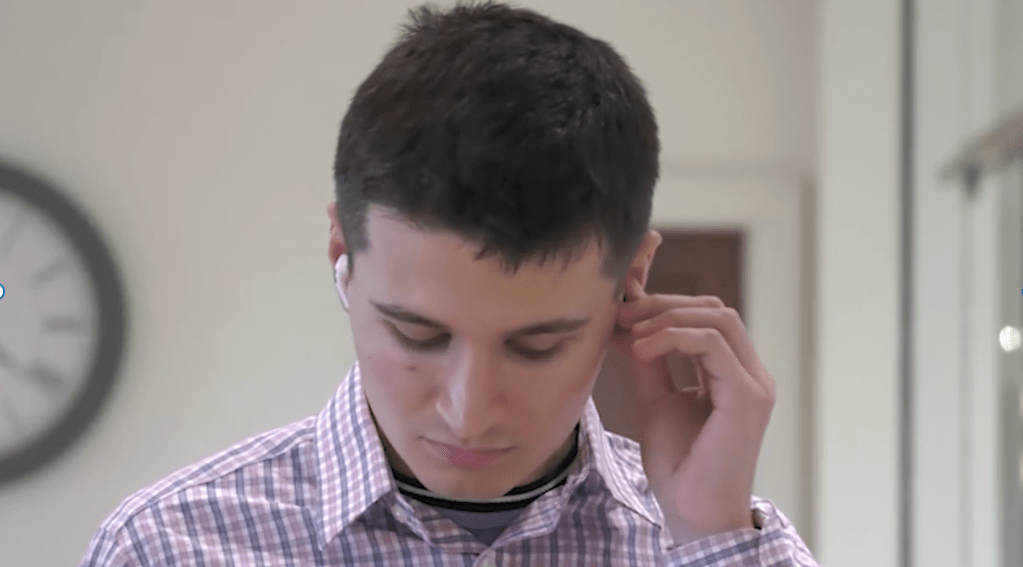
“I do try to be conscience of how loud it is just because I have been wearing Air Pods for several years now and as I have gotten older, I have noticed changes in my hearing,” said High Point University junior All Iler. “I can still hear well, but sometimes my ears will start to ring for no reason for couple of minutes and it has gotten worse.”
It is important to realize the issue; and there seems to be a bit of hope moving forward thanks to technology and advocacy. “It is nice to see some of the changes…where you get an alert letting you know your volume is too loud and can cause hearing loss,” said Miller. “We are just in an age where we
have so much information at our fingertips…so I am hopeful of these types of things.”
While the knowledge of the ear and the technology surrounding it have improved, the individual’s responsibility to take care of their own health is still the main solution to stem early hearing loss.
 NewsPoint Network