By Madelyn Cooper
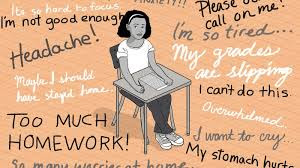
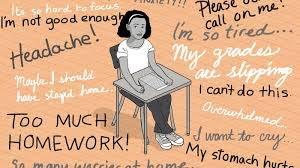
Depression and anxiety affect people of all ages, genders and races with the alarming rate of clinical depression affecting almost 280 million people worldwide. But what is not talked about often enough is how mental health affects college students.
Although, mental health problems in students are not always visible, many college students are afraid to reach out for help until it is “too late.”
There’s a famous quote by Robin Williams, the famous actor and stand-up comedian who committed suicide in 2014: “I used to think the worst thing in life was to end up all alone. It’s not. The worst thing in life is to end up with people that make you feel all alone.”
What problems do students face?
HPU students were interviewed about how mental health has affected them personally in college and outside of school. The students chose to stay anonymous.
One of the students whom was interviewed is a graduate student.
“I didn’t realize I had mental health issues until about a month ago,” she said. “I always knew I was a little different in certain aspects, but I never said ‘Oh, I have extreme anxiety or OCD because it never really affected me in that way.’”
Recently, she had an extreme episode while she was driving and ended up giving herself vertigo. Initially, she thought there was something wrong with the prescription of her glasses, but things only seemed to get worse from there. She would only be able to drive with another person in the car or not be able to drive for more than five minutes.
That’s when she began seeing a therapist. Even waking up and going to class would become difficult for her. She knew it was time to seek out help.
Her therapist told her to also seek treatment from a doctor.
“Okay, this is actually what you have, but you’ve been putting it off for so long that it is eating you alive,” the doctor said.
A student whom is a freshman at HPU, claims there are several things she wishes her professors or friends knew about how mental health affects her as a student.
“I used to always be the person people would come to to tell me about mental health issues and at the time, I did not realize how much it affected me and how much it affects me now being put in this situation because I always say ‘I don’t want to be the burden,’ when I’m really not the burden,” she said. “More or less, I want my professors or friends to understand how I really think about myself. There are definitely some professors that I feel comfortable contacting to let them know I will not be able to come to class if I’m having a panic attack or mental breakdown, but there are also some who I would never even consider telling.”
A counselor’s perspective
Ms. Jill Hanson is a counselor with the the Office of Counseling Services at HPU. She was asked what is the main mental health concern that students have when they come to counseling services.
“Primarily, what we see with most students that come in are dealing with and how to cope with anxiety and also we some effects of depression,” said Hanson. “These are both largely due to issues with stress.”
Hanson elaborates on how the pandemic has effected students’ performance levels.
“Studies show that nationally, mental health got drastically worse with COVID-19,” said Hanson. “And also, surveys with college students that were conducted after March 2020 repeatedly suggested an increase in psychological distress amongst college students.”
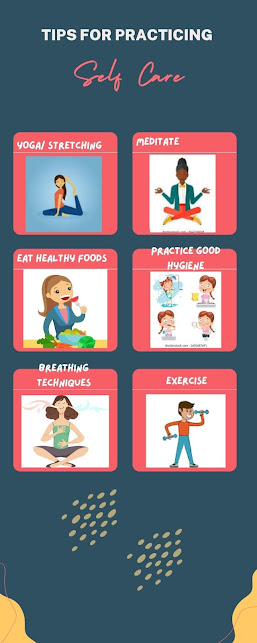
Hanson explained how to properly self-care and how counselors at HPU discuss self-care techniques with students.
“Self-care includes taking care of both your mind and body, not just physically,” said Hanson. “A big one that students neglect frequently is sleep. Research experts will show that you can’t just get 7-8 hours every now and then. Your brain needs consistency when it comes to sleep. Any kind of movement or physical activity you can do, taking study breaks, brain research shows that you can focus for about 90 minutes, and then your brain needs a break.”
What the surveys and statistics say
It is no secret that the pandemic has taken a huge toll on college students being able to perform well academically and socially.
In this multimedia article, a college counselor from the University of South Florida tells his students that his goal is to “never see them again.” While it sounds like he is joking, he also tells them “I shouldn’t be in your life forever.”
In the Student Voice Survey of over 2,000 undergraduates, students were over twice as likely to rate their overall mental health as poor (22%) than excellent (9%), with 56% responding “fair” or “poor.”
Mental health doesn’t just affect students mentally and physically, it can also affect academic achievement and satisfaction with the college experience. In this article, it shows research that suggests depression is associated with lower grade point averages and that re-occurring depression and anxiety can increase this association.
If you or a friend is struggling with mental health please reach out to a counselor or therapist. If it is an emergency, call the 24-hour Suicide Prevention Lifeline at 800-273-8255.
For further resources, please visit the articles below.
Mental Health Conditions: Depression and Anxiety

